
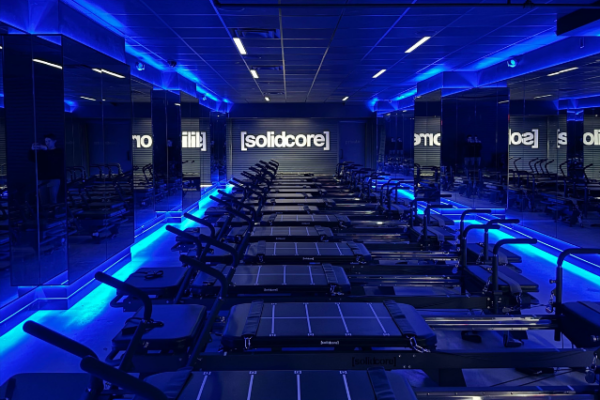
What losing [solidcore] taught me about identity, trust, and sustainable performance
For a long time, [solidcore] wasn’t just something I did. It was part of who I was.
It structured my weeks, anchored my routine, and quietly reinforced an identity I was proud of. Strong. Disciplined. Committed. Showing up was automatic because it felt aligned. It felt like me.
Then I got injured.
And suddenly, the thing that once grounded me was gone.
What surprised me most was not the physical disruption. It was the identity gap that followed. When a system you’ve trusted becomes unavailable, you’re forced to confront how much of yourself was built around it.
That moment became a turning point, not just in how I approached fitness, but in how I understand trust, attachment, and long-term engagement.
What Happens When the System You Trust Disappears
When [solidcore] was no longer an option, I had to make decisions quickly. Not about what would optimize performance, but about what would protect longevity.
That shift exposed something important. I wasn’t grieving a workout. I was grieving the loss of certainty. The predictability. The comfort of knowing exactly how to show up.
In that space, I noticed how easily optimization can turn into over-identification. When progress is tightly linked to a single system, routine, or brand, the relationship becomes fragile.
The moment the system fails, trust is tested.
This is where personal experience and marketing strategy intersect.
Identity Is the Real Loyalty Driver
People don’t stay loyal to brands, platforms, or systems because they are perfect. They stay loyal because those systems support who they are becoming.
The mistake many performance systems make is assuming consistency comes from rigidity. In reality, consistency comes from adaptability.
When something allows for change, injury, evolution, or pause without punishment, trust deepens. When it demands sameness to maintain value, people eventually disengage.
Losing [solidcore] forced me to rebuild my routines in a way that respected my body instead of overriding it. That experience sharpened my understanding of how trust is earned, not enforced.
Trust breaks the moment performance requires self-betrayal.
That lesson applies far beyond fitness.
The Marketing Insight Hidden in the Loss
From a marketing perspective, this experience clarified a skill that matters deeply in global contexts. Sustainable brands design for transition, not just adoption.
Markets shift. Consumers change. Bodies age. Priorities evolve.
Systems that win long-term trust are not the ones that promise optimization at all costs. They are the ones that remain relevant when circumstances change.
In practice, this means designing experiences that feel supportive rather than prescriptive. It means leaving space for the customer to step back without losing their sense of belonging.
In my own life, I stayed committed to growth only after I stopped forcing it through one definition of success.
That same principle governs lasting brand relationships.
What I Carry Forward
Losing [solidcore] was not a setback. It was a recalibration.
It taught me that the most powerful systems are not the ones we cling to, but the ones that allow us to evolve without fear of losing ourselves.
Whether I’m rebuilding routines, engaging with brands, or evaluating long-term strategies, I now ask a different question:
Does this support who I am becoming, or does it require me to stay who I was?
The answer determines trust. Every time.

Leave a Reply